project summary
A sales analytics system for Wildberries sellers that combines official API data and product page parsing. The result is transparent analytics and smarter replenishment recommendations based on sell-through speed.
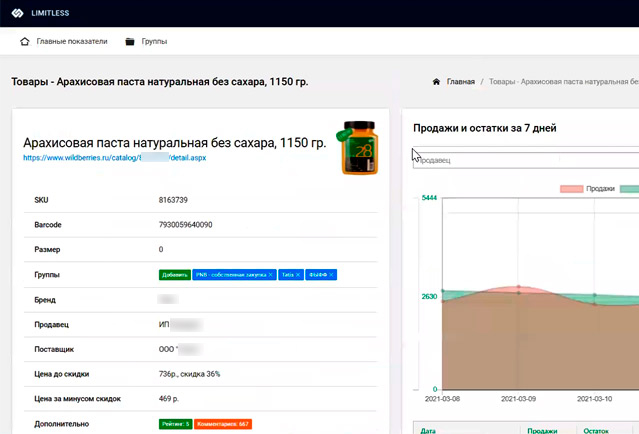
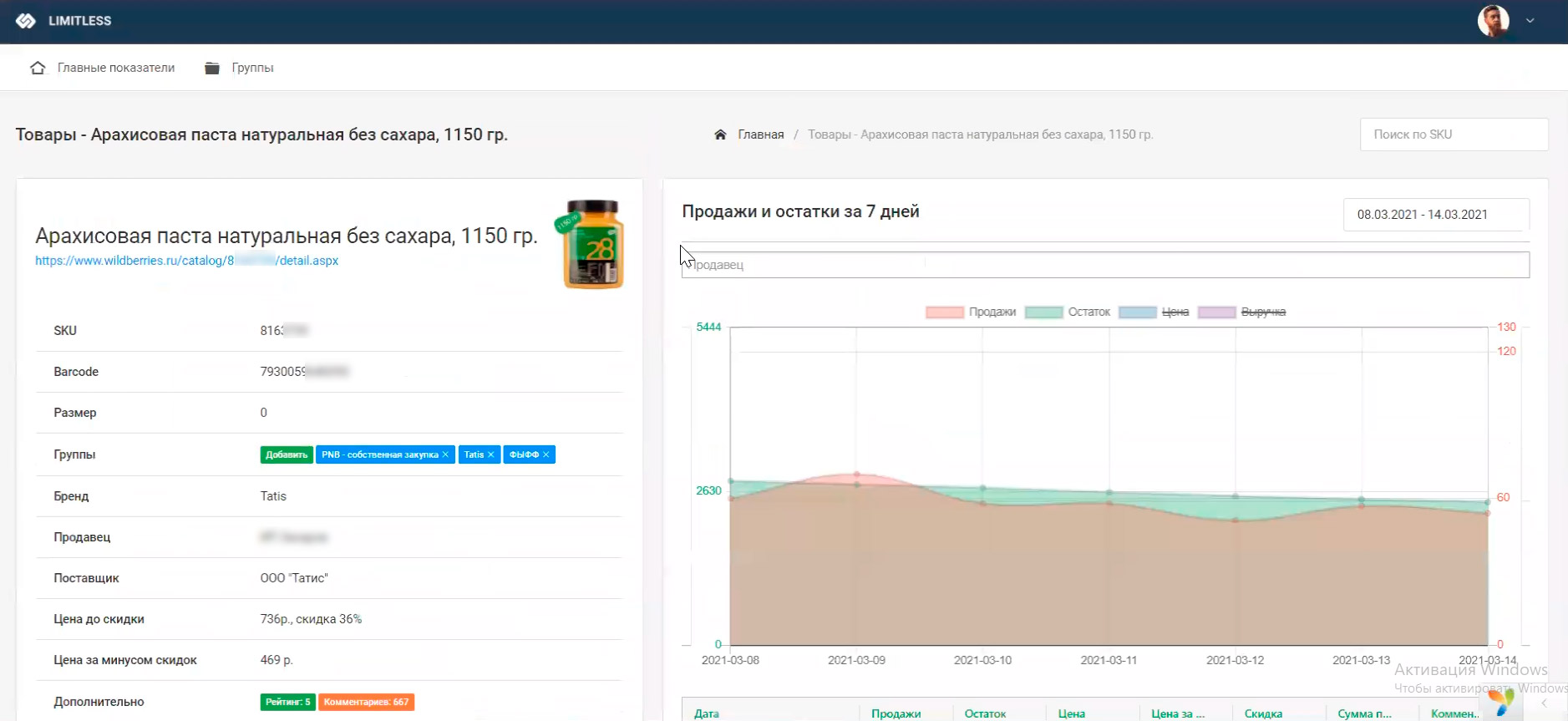
The system gives the seller fast analytics per SKU: margin including all costs, real-time stock and sales history. AG-Grid tables speed up analysis while API collection and parsing remove manual work. The business can forecast demand and plan supplier orders based on sell-through, reducing overstock and missed sales.
THE TASK
A seller actively working on the Wildberries marketplace came to us with no fast, transparent analytics for their products. Marketplace reports did not make it easy to estimate real margin per SKU after commissions, logistics, and storage, while manual data collection took dozens of hours every month. They also lacked a way to track demand elasticity when prices changed, monitor stock dynamics, and see turnover at SKU level to make purchasing decisions without overstock or missed sales.

The business needed a single system that aggregates scattered data — sales history, current stock, price history, and logistics movements — and presents it in convenient tables and charts. The client placed special emphasis on forecasting demand and generating supplier orders from automatic recommendations based on actual sell-through speed and current warehouse balances.
SOLUTION
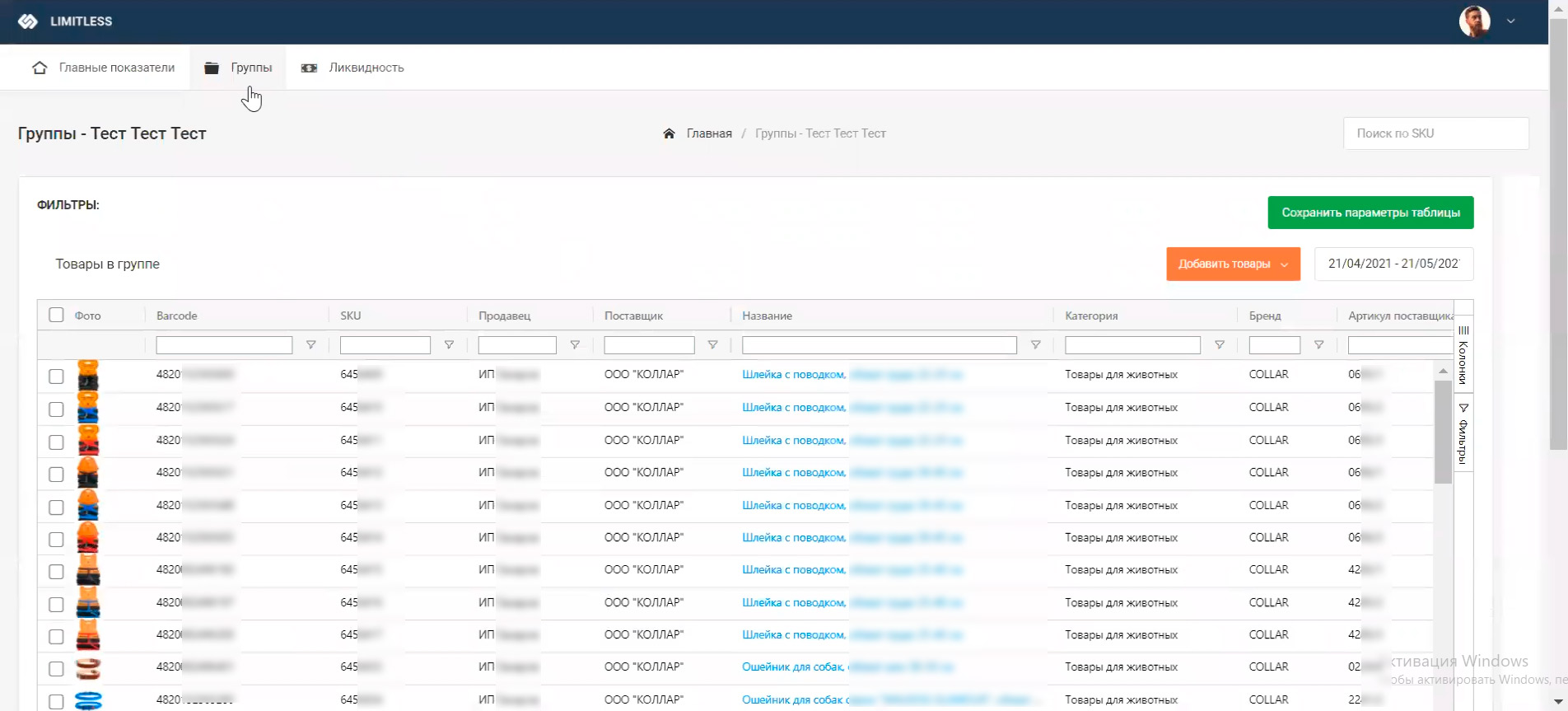
We chose the Laravel PHP framework for fast development, flexible routing, and convenient queue processing. To display large datasets and interactive tables we used AG-Grid, enabling dynamic filters, sorting, and grouping directly in the UI without extra server requests. Data collection runs through two channels: the official Wildberries API (sales reports, stock, inbound shipments) and product page parsing for additional information such as competitor prices, reviews, ratings, and category data unavailable through the API.

Core system features
- Full sales history per SKU with quantity and revenue metrics by day and warehouse.
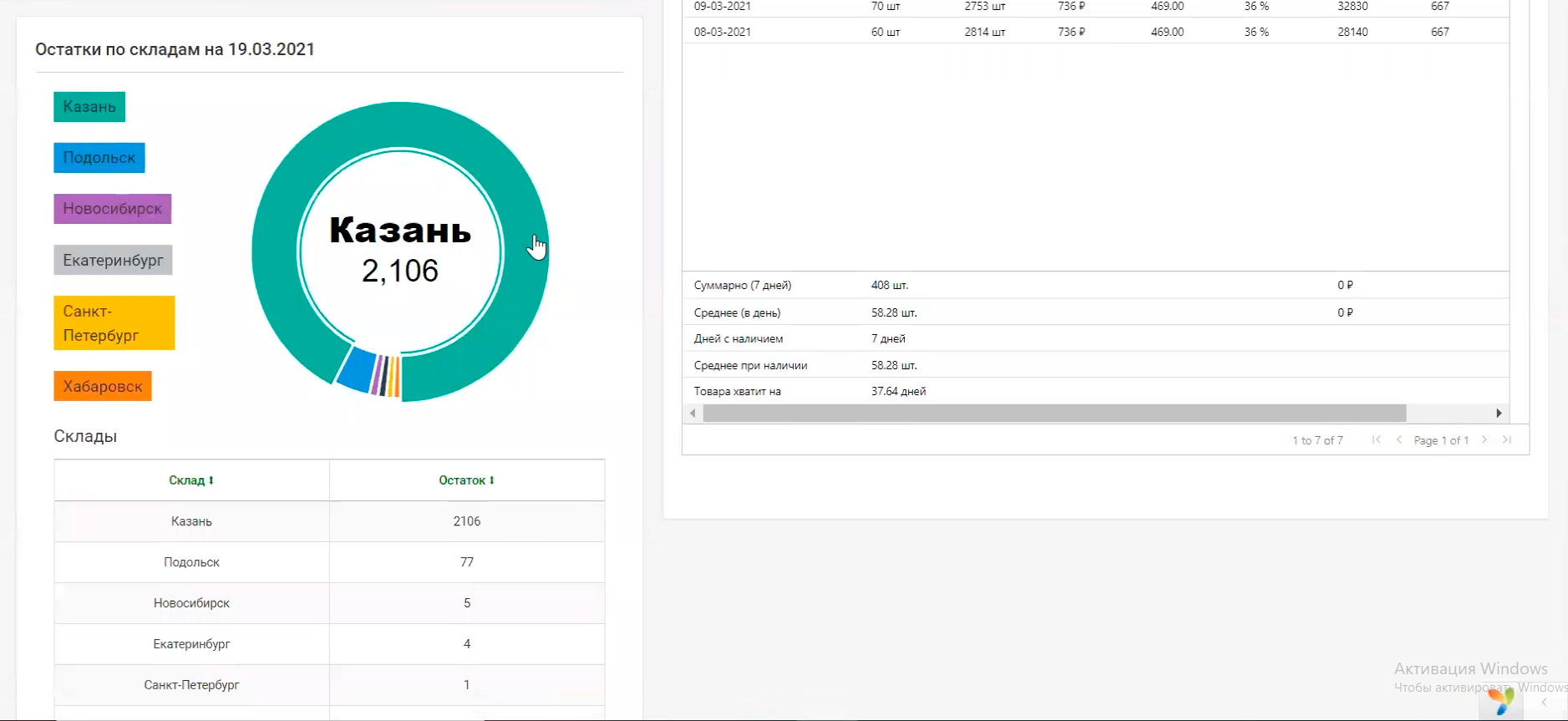
- Real-time stock by warehouse with in-transit and available-to-ship highlighting.
- Availability analysis: automatic calculation of in-stock and out-of-stock days for the selected period.
- Product grouping by stock, sales, turnover, or custom manager criteria.
- Replenishment orders with automatic recommended quantity and XLS export for suppliers.
- Interactive charts for sales, stock, price dynamics, and revenue by SKU, selection, or group.
- Independent turnover calculation compared with official Wildberries figures.
- Personal manager settings: saved filters, columns, and dashboards.
- Demand elasticity monitoring when prices change.
IMPLEMENTATION
The project was delivered in stages: four months of active development followed by nearly six months of improvements. Long-term support allowed the team to validate the system on live data and refine algorithms based on feedback from the seller's team.

Data collection and processing
The main challenge was merging streams from different sources. Daily sales and stock reports arrive through WB statistical and warehouse APIs, while some data — for example effective retail price after discounts or category position — was extracted through controlled product page parsing. A proxy pool with geo routing and retry logic with increasing delays was used to work around limits. Raw data passes multi-step cleansing and validation before being stored in denormalized tables for fast queries.
Updates are scheduled in Laravel: heavy reports load at night, while lighter metrics such as stock and prices sync every 30 minutes. Results are cached so thousands of rows render in the UI without delay.
Architecture and security
The system runs in a private environment on the client's dedicated server. Access is authenticated and role-based: analysts see all reports, purchasing managers see only their product groups, and leadership gets an aggregated dashboard. Marketplace API tokens are stored encrypted. Order XLS generation and all changes are logged to control planning dynamics.
Recommendation engine
The key intelligent module calculates automatic replenishment recommendations. The algorithm analyzes sell-through over the last 2–4 weeks, current stock, supplier lead time, and seasonal coefficients. Recommended quantity covers demand until the next delivery with safety stock. Managers can tune parameters and export a ready file for the supplier without manual calculations.
RESULT
The platform became the central tool for inventory and pricing decisions for the seller's internal team. Daily effort on data collection and analysis dropped by more than 70% — all key metrics are now on one screen. Transparent margin calculation including all costs helps the business decide when to launch new SKUs and adjust prices based on demand elasticity.
Automatic replenishment reduced stockouts during demand peaks by 25% and cut dead stock through more accurate forecasting. Flexible personal settings and groups let several managers work in parallel without data conflicts. According to the client, development paid back within the first three months of production use.
• Automated data collection through the official Wildberries API and product page parsing. • Interactive AG-Grid tables with dynamic filtering and grouping. • Automatic calculation of recommended replenishment quantity for suppliers.