


How REST API is Used in Mobile Development
In this article, we will take a detailed look at what REST API is and why a mobile app needs it.
About API
But first, let's talk a little about terms and key concepts. Above all, we need to understand what an API (Application Programming Interface) is and what tasks it solves.
An API is, first and foremost, an interface (see the abbreviation above). The functions of an interface can be easily explained using something familiar and tangible—something from everyday life. For example, a car. What do we usually use a car for? Let's agree, the basic task of a car is to move us from one place to another. Everything else—transporting things, making money, or say, racing—comes later.
The next question—how does the car move and transport us? Even without knowing the details of how a car works, we can say that it has a body, chassis, and engine. These main parts consist of many smaller components, assemblies, parts, and mechanisms. And together, they all form a single vehicle and allow it to perform its basic function.
We don't see all of this, yet we can control the car. In this case, we are interacting with the interface to control it. The steering wheel, pedals, levers, radio, air conditioning, etc.—these are exactly the interface, relatively simple and accessible to the driver, which allows controlling more complex mechanisms and processes. This can also include many other real-life examples:
- household appliances;
- production machines;
- your smartphone;
- game consoles and much more.
Thus, an interface is a kind of boundary and connection between different systems (in the car example—between the vehicle and the driver), which regulates their relationship through certain preset algorithms and rules.
Now let's move to the first part of the API abbreviation—Application Programming. Here we clearly see references to software—instead of a car and driver, various programs, web services, etc., appear.
About REST API
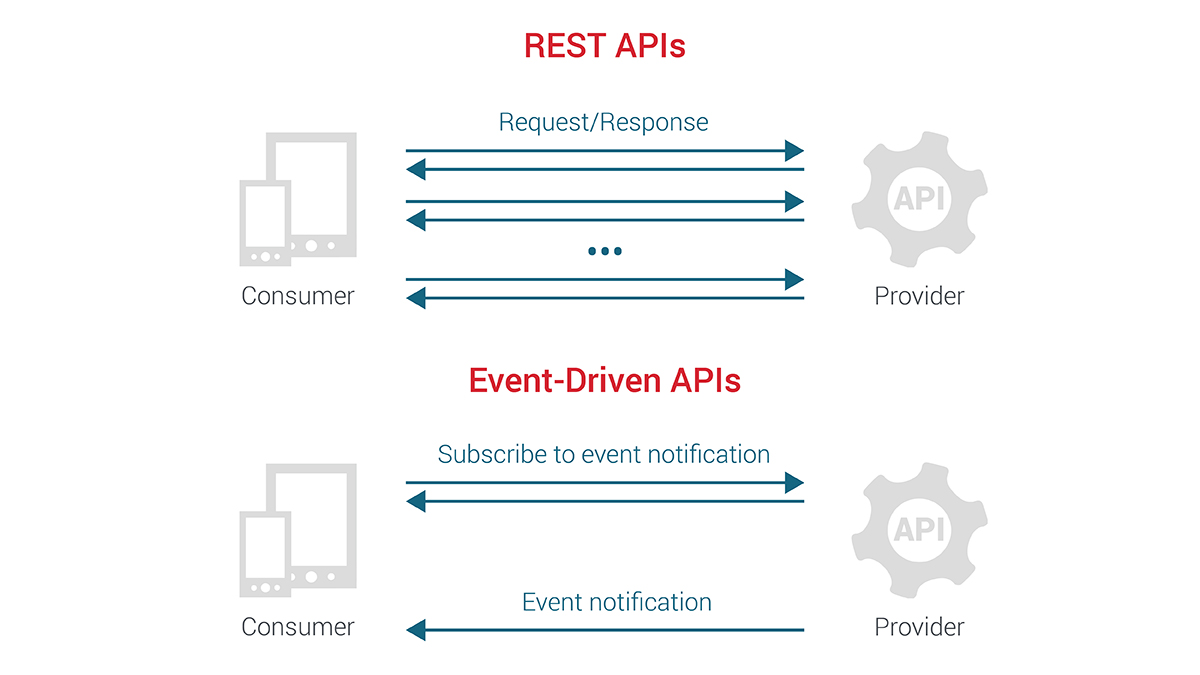
With all that, REST API is a specific implementation of an API. If API is an architecture, then REST API is an architectural direction. REST API is a mechanism for communication between websites and mobile applications with a server. And REST (Representational State Transfer) here specifically means a way of implementing an API (over HTTP).
For example, when you want to watch a video on a hosting site, the REST API first executes a certain algorithm and then plays the video from the server on your device. Today, REST API is the most popular and demanded API option, which has confidently pushed aside all others (SOAP and WSDL).
It is important to understand that REST API is not a protocol or a standard, but the principles of REST API allow effectively organizing communication between servers and websites or mobile applications and building server architecture using, for example, HTTP and URL.
REST API includes 7 basic principles:
- Client-server separation – the user interface, for example, a search on a website, includes the request code, while the data access code operates on the server side; this solution significantly simplifies the API and allows, for example, easier porting of the user interface to other platforms, i.e., full and fast scaling of the site or application;
- Statelessness – the server should not store data about client actions, but the content of the request itself still allows fulfilling it—getting the required information;
- Cacheability – the request via REST API indicates whether the information should be saved in a special buffer for frequent requests; in this case, the client can receive information from this buffer on similar requests without directly accessing the server;
- Uniform interface – in REST API, data is requested through a single URL using standard protocols (HTTP), which also simplifies the architecture of the mobile application (or website) and makes server communication more logical;
- Layered system – REST API servers often reside on multiple layers, each interacting with its neighbors but not with other layers;
- Code on demand – the server sends code to the user (in the video example above—a script to activate the video); thus, the code of the website or mobile application remains as simple as possible and is only complicated when necessary;
- Starting from scratch – in REST API, the client has access to only one entry point to the server, and further communication is provided by the server.
These key principles largely determine the conditions and necessity of using REST API. Therefore, REST API is often used, for example, when caching requests is needed, or when the connection to the server is limited. Also, REST API is implemented when significant scaling of the mobile application or website is planned (we discussed this possibility in detail above).

REST API traditionally relies on the standard HTTP protocol. Objects on the server have their own unique URLs. Imagine an app for booking hotel rooms: you can book rooms of three classes. In REST API, each class has a separate URL that uniquely characterizes that class—say, room availability data. This allows the future guest to choose and book a free apartment. Additionally, when a client makes a request via REST API, the information is cached—similar requests will no longer go directly to the server. This architecture also helps identify priorities in service. For example, the need for more powerful servers for handling luxury class rooms. Moreover, it is much easier to scale.
REST API in Applications
So, how is REST API used in mobile development?
And here we need to dig a little deeper again. Do you know exactly what a mobile application is? After all, we (ordinary users) usually only see its visual, external shell (or UI—User Interface). But developing an application involves solving a whole range of important issues—where to store data, how to accept payments and interact with the player or customer, how to send messages, etc. (remember the car example!). And which of these requires REST API? None. If, of course, we are talking about a single device.
But as soon as there are more users (as you know, that is usually the case with applications), the need for interaction and data exchange arises. Other examples of conditions for implementing and subsequently operating REST API include losing a device, resetting its settings to factory defaults, and providing remote support for thousands of smartphones and computers. This is where REST API comes to the rescue.
In this same category of important tasks is the desire to give users access to paid information or features. For instance, for an SMS aggregator to perform its task of sending messages, you don't need to know the structure of mobile networks (again, think of the car). It is enough to integrate with the platform's REST API and use the appropriate API method.
Simply put, a mobile application, to fulfill its purpose, communicates with the server, which centralizes some business logic. REST API is responsible for this connection between the application and the server. Remember what it is? A set of rules and algorithms within which the application will interact with it. For example, you want to order something from your device—the application communicates with an external server via REST API. The server responds, and then other users—potential executors—become aware of your desire to place an order.
Thus, an application needs REST API because it is the simplest tool for creating, reading, updating, and deleting information that is provided and transmitted between users. REST API is suitable for any application that can connect to the internet. It is also clear that this indicates the universal and pervasive nature of REST API that this method of organizing interaction between app, user, and server has today.