


Custom Mobile Game Development Process
Games for wearable mobile devices today represent a practically endless source of leisure, entertainment, and vivid emotions for millions of people around the world. Studies claim that smartphone buyers invariably download games onto them within the first week of owning the device. You can probably confirm this statement yourself, right?
The rapid development of technology makes mobile entertainment not only more accessible, but also extraordinarily engaging, diverse, and inspiring.
As we know, if there is demand, there is supply. Thousands of people and companies are involved in the mobile game industry. At the same time, the complexity of the process makes the tasks of mobile game development and bringing the corresponding software to life a challenging endeavor, requiring not only high qualifications but also very serious investments—temporal, labor, and financial. To launch a game, you need to know how to develop it, as well as the specifics of publishing and promoting it in stores where your product can be purchased by ordinary users.
The task of directly creating a mobile entertainment product also requires knowledge of special tools, the stages of realizing an idea, and launching the product into the "big world." We will examine each of these steps individually to make it as clear as possible for you. So, let's take a look!
Is it worth it?
But let's start with what matters most to many—how profitable is it to engage in mobile games? First of all, let's agree that this market, although the industry itself is only a few years old, is today extraordinarily vast, broad, and indeed rich. According to expert estimates, nearly 3.3 billion people on Earth use mobile games. We dare say that this impressive number will only grow.
Incidentally, the pandemic gave a noticeable push in this regard. Analysts point out that in the first quarter of 2020 alone, the number of mobile game enthusiasts increased by 46%. Against this backdrop, forecasts for the industry revolve around the following figures: 11% growth each year and nearly $117 billion in total revenue by 2024.
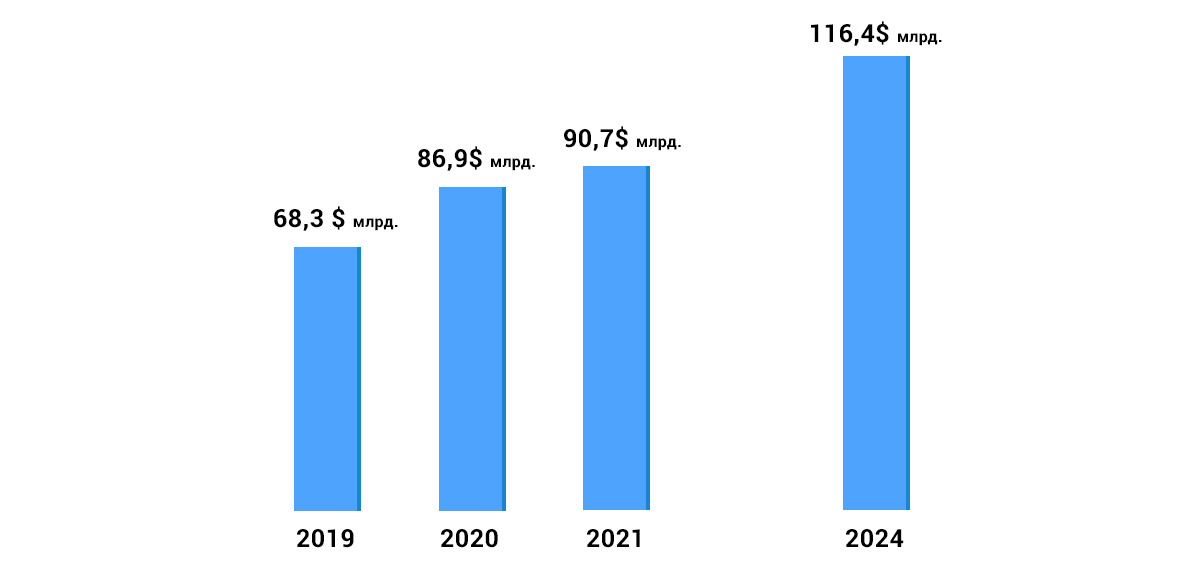
Are these indicators enough to have no doubt that mobile entertainment is certainly a profitable field? More than enough. Is it worth investing in the industry? Absolutely.
Step by step
Hundreds or even thousands of developments appear daily in app stores for smartphones. It is clear that not all of them are destined for success. Becoming a true hit is the lot of a select few. So what is the key to success? A high-quality, non-trivial idea, thoughtful monetization, and interesting mechanics. But let's go through how to create a bright and engaging game step by step:
Eureka!
Idea, idea, idea… Let it come to you like it did to Archimedes, who shouted "Eureka!" or as a result of persistent, thoughtful work, it doesn't matter. But the beginning of the path to success is right here. It is not at all necessary to "reinvent the wheel" or try to invent something very complex or exceptionally unique.
Sometimes a simple but ready-made concept (for example, from some existing project) can easily turn into something truly worthwhile and quite independent. Following this comes the most important thing—the future inspiring experience of those who will play.
Story
An idea must be endowed with a certain "tangible," palpable, perceptible form—create and describe your worlds, characters, and stories so that the user can truly see and feel—in the literal sense, experience your product, all its features and advantages.
Do not forget that this will help you earn not only the respect and loyalty of players, but also their generosity. However, some genres, for example, do not require such deep development of what is called "story." For instance, puzzles are understandably much less demanding in this regard.
Planning
Do not forget about a strict, detailed, and well-thought-out action plan during the mobile game development process. This helps to implement ideas and concepts much more effectively. The standard here looks roughly as follows:
- graphics
- marketing component
- gameplay
- technical aspects and implementation
It is clear that the elements of this plan are closely interconnected and mutually influence each other—if something changes, other parts also undergo changes. Therefore, it cannot be called immutable—everything here is quite flexible. It is also understood that work on individual elements is usually carried out in parallel.
Production cost
The mobile game development process is inevitably tied to budget capabilities and the investment attractiveness of the project. To forecast costs, it is important to consider several key points:
- operating system, platform for which the content is created
- scope and complexity of preliminary work
- scope and complexity of subsequent work
Combined accounting and calculation of all these factors will help make your game not only exactly as you envisioned, but also profitable and cost-effective. In the case of custom mobile game development, the contractor will typically offer you several pricing options for implementation.Platform for production
Android or iOS? Or would a cross-platform development option be more suitable? In this case, the budget available for game development or existing opportunities to attract investment also play a significant role.
It is clear that an application for users of only one system will somehow limit the circle of potential players and, consequently, opportunities for distribution and monetization.
Engine
The game engine is a very important part because it helps implement certain features, such as 3D or drag-and-drop functionality. There are several options here, and the choice depends on specific goals and tasks. The game can be written in different languages, which also largely determines the final infrastructure of your product.
Game design document
So, the overall concept is ready, the plan is in place, and there is an understanding of the budget and costs. What next? It is time to proceed to a very exciting and extremely useful stage—documenting the game design of your future masterpiece.
This is the real "book" of the game, where all elements are recorded and described—from technology to architecture, design aspects, and so on. Here you specify everything you want to see in your game, and it also states that it meets the necessary coding for production and release.
Structure
A practical and important part—game infrastructure. Textures, heroes, individual objects, and entire worlds—all this will allow gamers to immerse themselves fully in your game and believe in it. At this stage, the appearance of your product is finalized, including the approval of the 2D or 3D design shell. Here you will likely have to face the fact that you will need to do a lot of intensive coding and designing. This should be kept in mind even at the planning stage.
Prototype
The next necessary stage is developing a prototype of the game for the chosen platform. This preliminary structure should include all the main elements and mechanics of the final product.
The process of producing a prototype often turns out to be quite time-consuming, as it includes not only reproducing key forms but also involves meticulous work on errors. Do not spare time and effort on this, because it will allow you to make the future gaming experience of gamers as enjoyable and hassle-free as possible.
Game
After the prototype comes the actual development of the game. Be careful to avoid the mistakes identified in the previous step and to craft precisely the message that will bring pleasure to users. Everything matters here—design, technology, features, navigation, and so on.
Tests
Do you think everything is ready? No, no, and no! Next come various tests that will help polish your product finely before launch, making it as comfortable as possible to use and eliminating any remaining flaws.
Therefore, do not rush to release the game to market, so as not to be disappointed and not to disappoint gamers. Testing will help if not achieve, then come close to the ideal, so that the final result brings you profit. Professional developers test games in beta versions on several devices to achieve optimal performance under virtually any technical and other conditions.
Monetization
Now we move on to the monetization strategy—your income will largely depend on this. There are enough options here—these can be in-game purchases, paid subscriptions, additional packs, special versions, and so on.
But do not rush to fill the content with "pay-to-play" mechanics. Excessive enthusiasm for trying to make money may discourage players. This is especially true at launch, when the product has just appeared on the market and users are "trying" it out.
Conclusion
Our article describes in general terms a step-by-step scheme of mobile game production for a client. It clearly demonstrates the complexity, diversity, and duration of this process. And this, of course, will require inspiration, effort, resources, patience, and a willingness to overcome obstacles so as not to deviate from the goal.
Professional mobile game development teams with good cases and extensive experience can help you with this. Their participation will be a good guarantee of your success in producing original content and achieving target financial indicators.
Frequently asked questions about mobile game development
- What are the types of mobile games?
Today, many genres of game products for mobile devices are available (just select the appropriate filter in the app store)—action, arcade, puzzle, racing, sports, and others. Any user will surely find exactly what truly engages them and prompts them to pay adequately for a program they like, for example, yours.
- What platforms are used for production?
Different game mechanics require different tools and platforms. This includes, for example, 2D and 3D formats. Unity, Unreal Engine, Godot, Cocos2D, and others—choose the platform that will be most useful to you.
In our work, we have settled on Unity, which has a whole list of advantages that we will write about in another article. But for the client, it is important to keep in mind—the interchangeability of development teams and individual developers, versatility, and cross-platform capabilities to save budget when developing custom games for different platforms.
- How are mobile games monetized?
There are many options here too. Both direct and native. We talked about this above—ads, in-app purchases, subscriptions, and so on.
- How much does production cost?
This is an open question because the answer depends on a number of factors—genre and complexity, design and features of the product, even the country where development takes place.
Professional mobile game developers can provide a production estimate based on your vision of what you want to see as a result. It is important to understand that the costs of creating a game must be covered by future revenues from its existence in the user world.
If you need an estimate for your mobile game project—write to us using the form below or email us, and we will provide you with a cost estimate for custom mobile game development in a short time.