


project summary
A wholesale marketplace for industrial equipment and spare parts. Its core feature is continuous stock control from hundreds of suppliers based on price lists.
The client wanted a B2B marketplace for industrial components with more than one million SKUs, live stock from hundreds of suppliers, multi-vendor wholesale requests, and search visibility for large catalogs of similar parts.
THE TASK
The client set out to launch a wholesale B2B marketplace for industrial components and spare parts capable of handling a catalog exceeding one million SKUs. The main challenge was keeping stock levels up to date from hundreds of independent suppliers, each using its own price list format. Buyers wanted to see real availability across all warehouses in one place, submit wholesale requests to several sellers at once, and receive responses without a long approval chain. The platform also needed search visibility despite the lack of unique content for tens of thousands of similar parts such as bearings, bushings, and belts.
SOLUTION
We designed a platform that unites suppliers in a single ecosystem with role-based access, automatic stock synchronization, and smart content generation. Key architectural decisions:
- Supplier dashboard for assortment management, price list uploads (XLS/CSV), and REST API integration with the seller's ERP.
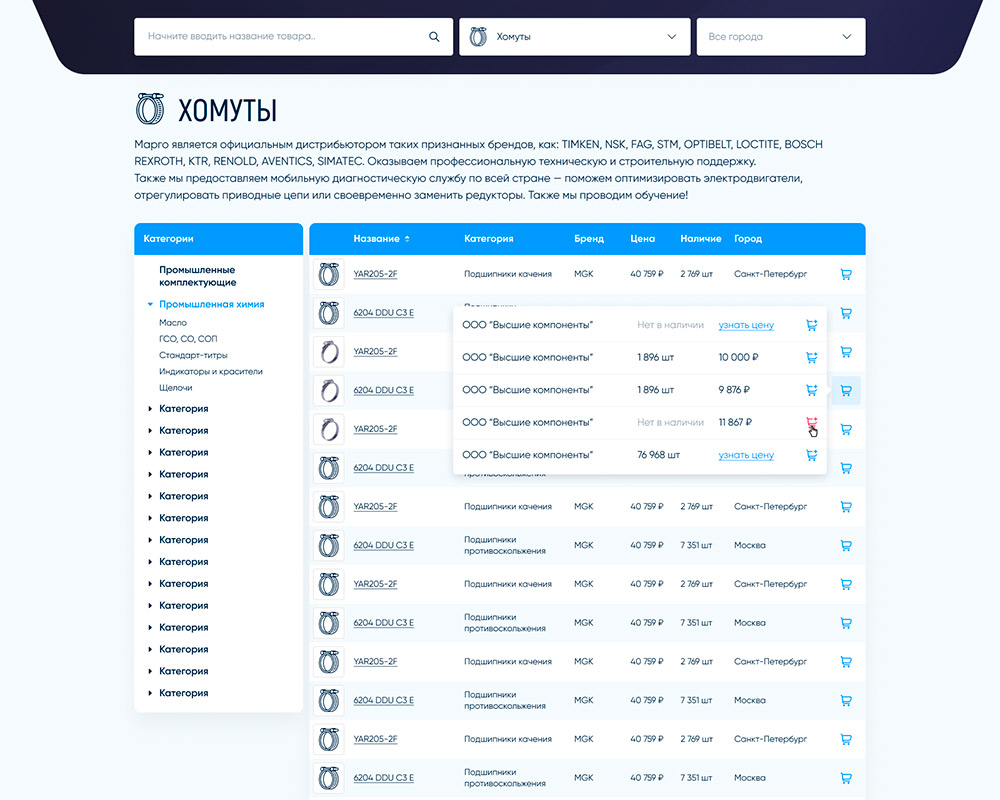
- Wholesale request cart — one request automatically routed to selected suppliers while the buyer sees live stock per warehouse.
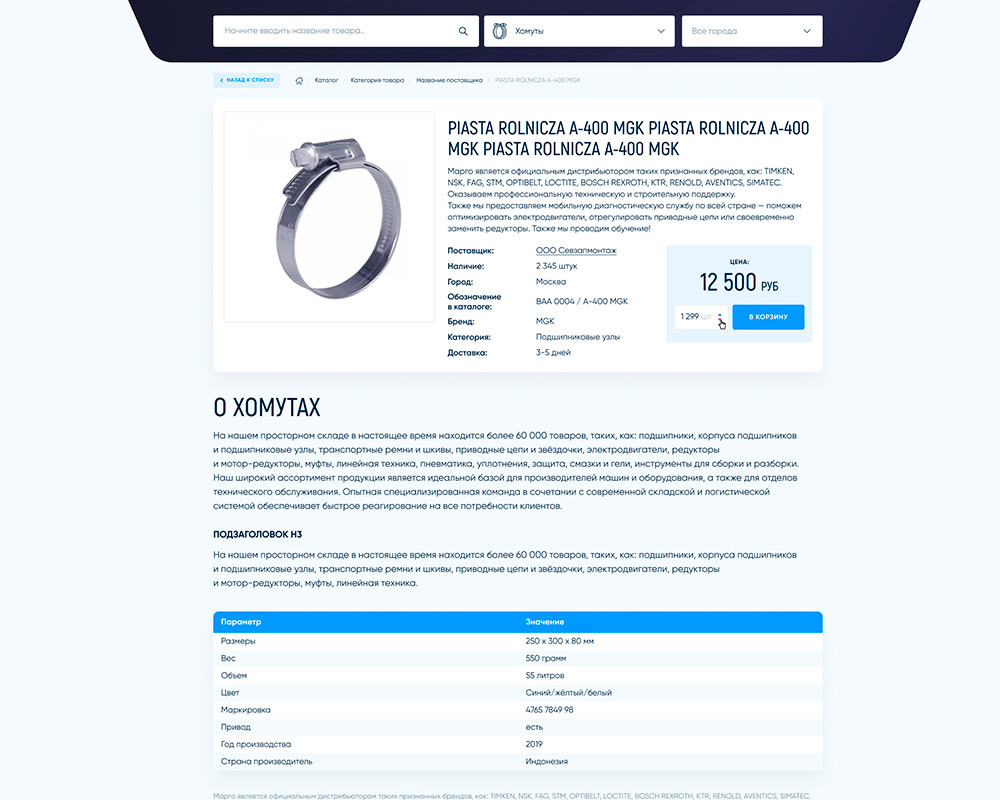
- Product card templating for SEO at scale. Descriptions are generated from variable templates (category, brand, specifications) and images are composed from a graphics library.
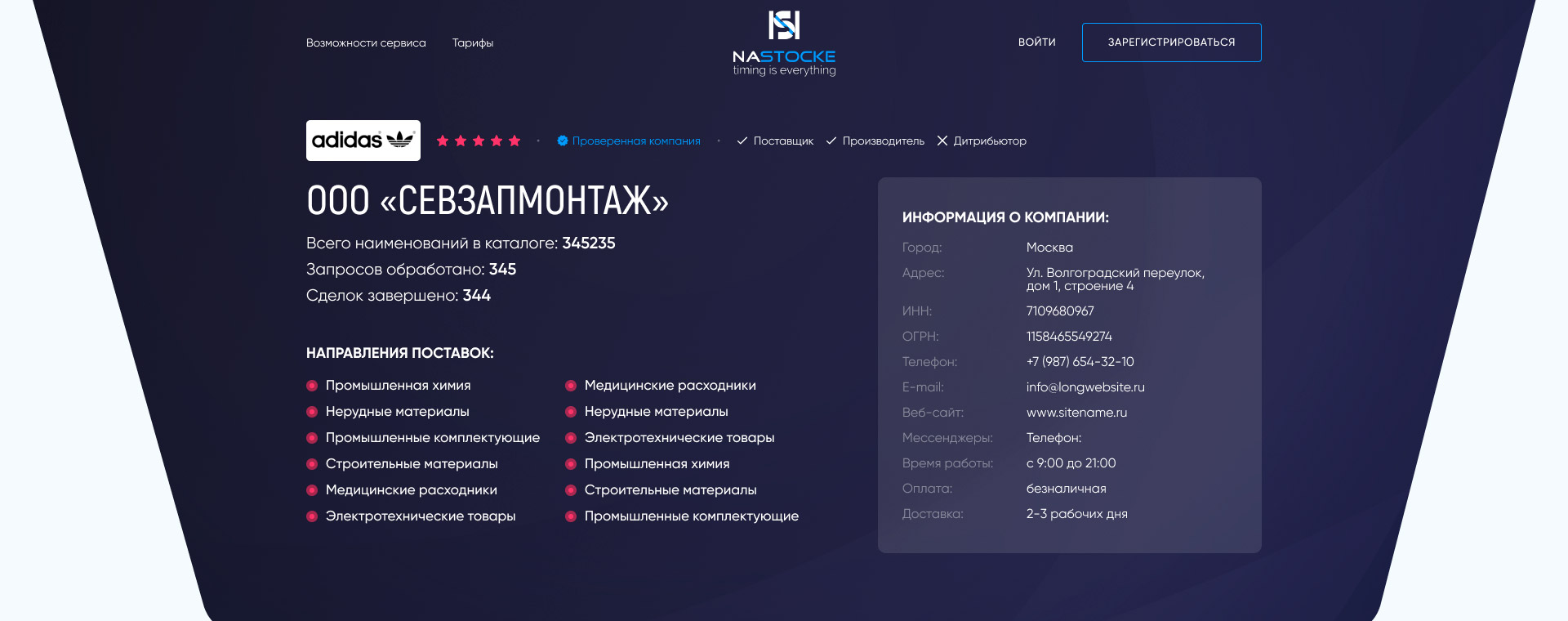
- Brand catalog and mini-sites for companies without their own website, with editable contacts, banners, and descriptions.
The marketplace operates as a SaaS product with flexible plans — from a free tier with limits to a full package with advanced dashboard, priority indexing, and analytics.
IMPLEMENTATION
The platform is built on Symfony (PHP), PostgreSQL, and Elasticsearch. RabbitMQ queues handle large data volumes and Redis caches hot search queries. The frontend uses Vue.js with server-side rendering to speed up indexing.
Stages and key modules
- Bulk price list import. A parser maps categories and brands automatically. Files with tens of thousands of rows are processed asynchronously with validation, live stock updates, and discrepancy logging. Background refresh tracks file versions.
- Product card generation. A content builder fills page blocks from 20+ templates based on part type and attributes so text stays unique for search engines and useful for procurement teams. Images combine background templates with technical labels.
- Search and filtering. Elasticsearch indexes the full catalog with filters by category, brand, city, warehouse, price, and availability. Sharding and query caching support peak load.
- Billing and plans. Suppliers choose a plan; payment history, invoices, and upgrades are automated in the dashboard.
One of the hardest problems was data consistency when dozens of sellers updated price lists simultaneously. We solved it with optimistic locking in PostgreSQL and asynchronous Elasticsearch reindexing with short lock windows. Content templates were tuned with the client's SEO team to avoid duplication while keeping natural language.
RESULT
Within a year of launch, Nastocke.com became a notable player in industrial components. More than 300 suppliers are active on the platform and the catalog exceeded 1.2 million SKUs. Template-based pages and automatic meta tags increased organic search traffic by 62%, while bounce rate dropped to 22% because users immediately see several offers with live stock and prices.
- Average wholesale request handling time fell from several days to 2–4 hours: buyers send one request to multiple suppliers who get instant notifications in their dashboard.
- More than 70% of sellers use one-page storefronts as an alternative to their own website with SEO and warehouse integration built in.
- The subscription model reached self-sustainability through paid plans and add-ons such as dedicated support and banner advertising.
- The marketplace keeps evolving with articles, news, manufacturer promotions, mobile API, and ERP integrations.
The project confirmed that even in a market with a million similar SKUs, high conversion and loyalty are achievable through automation, transparent stock, and a thoughtful content strategy.
• Built for the client's business goals • Integrations and load requirements covered • Launch and ongoing growth supported