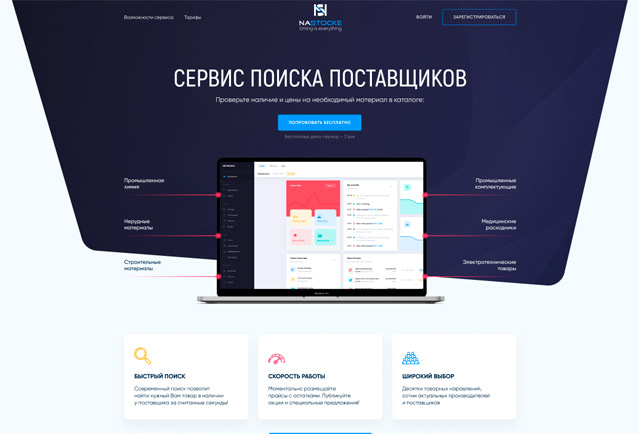
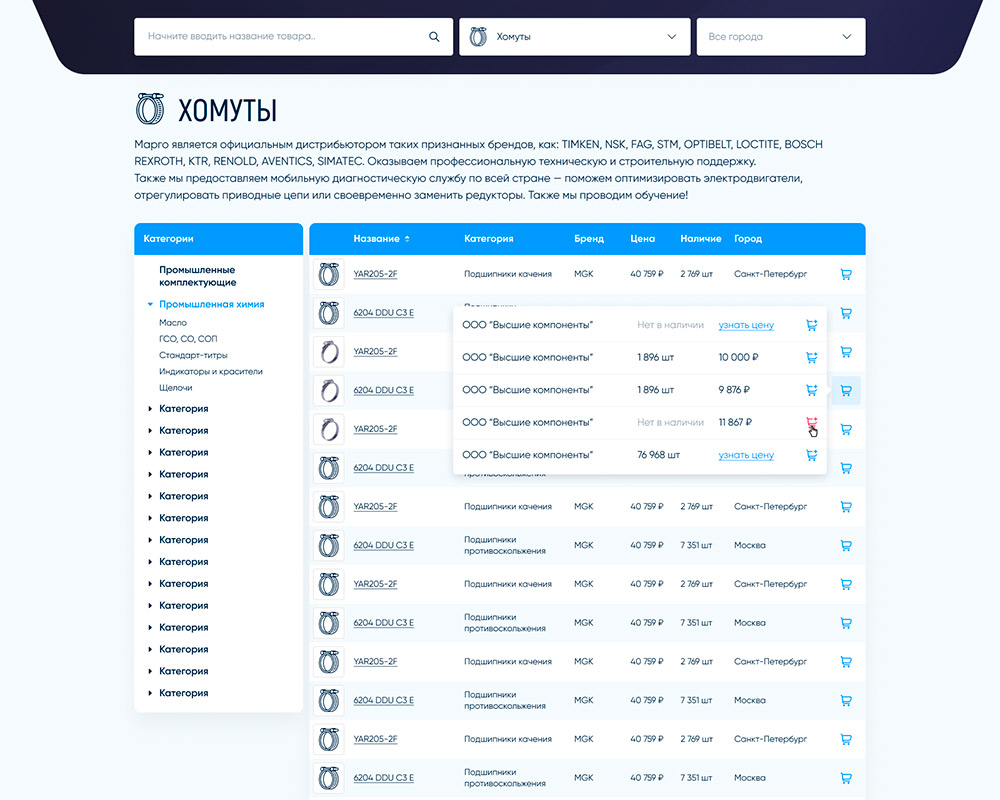
A B2B catalog of industrial parts with live stock from hundreds of suppliers and SEO product cards built for a million SKUs.

The client wanted a wholesale B2B marketplace for industrial parts with more than a million SKUs. Buyers needed real stock across hundreds of suppliers and a way to send one RFQ to many sellers without a long approval chain or endless email threads for every bearing and spare part.
The hard part was keeping stock fresh: every supplier used a different price-list format, and thousands of similar parts give almost no unique SEO content. The product needed stock sync, smart card generation and search visibility without hand-writing a million pages.
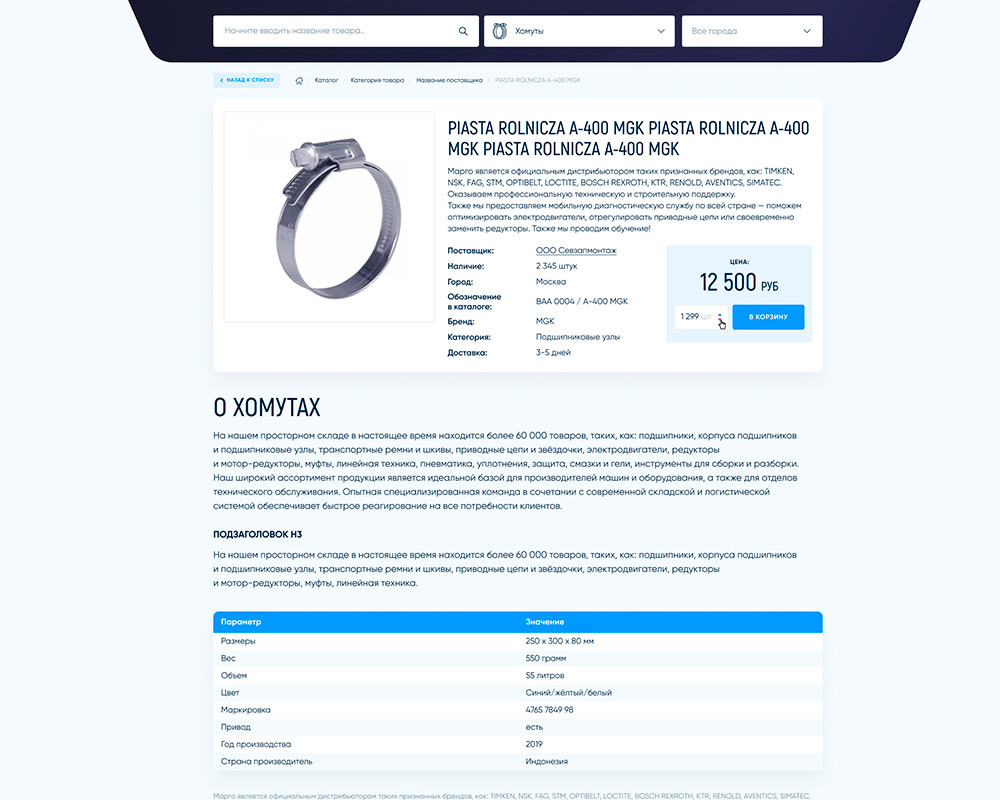
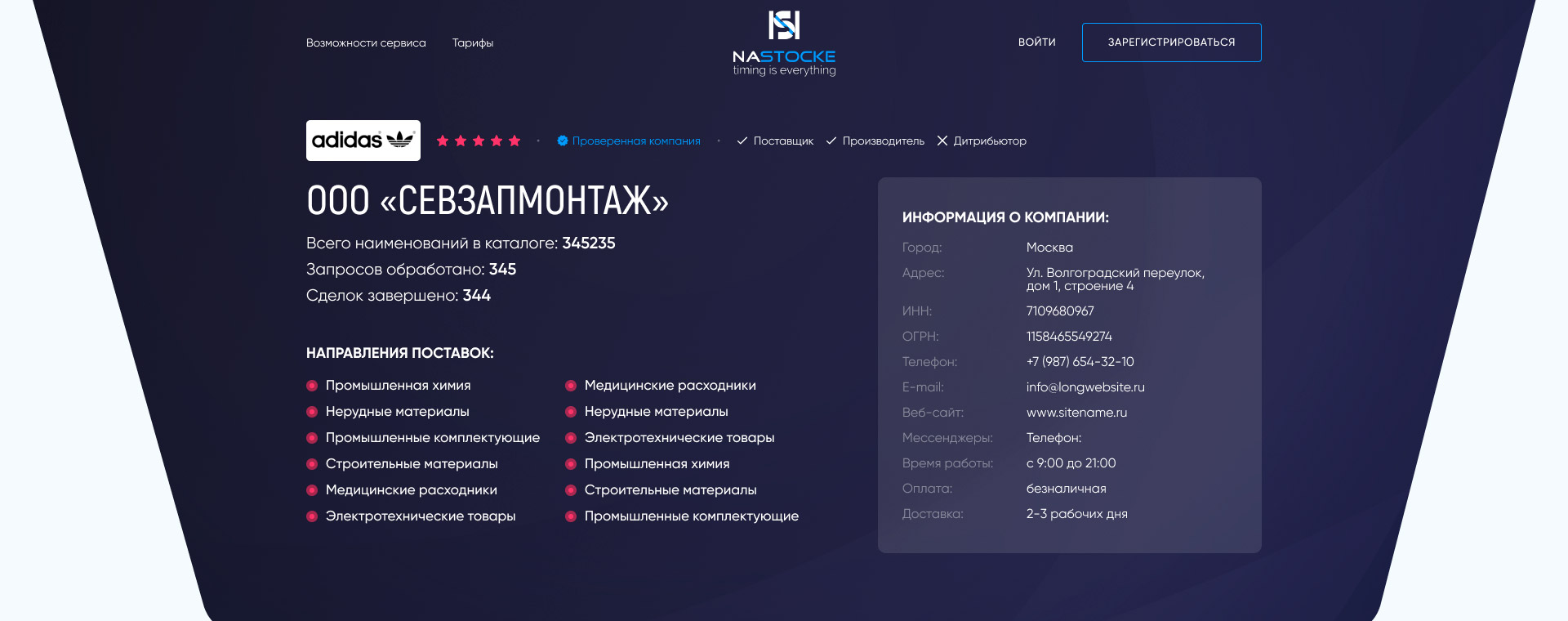
We designed a platform that unites suppliers in one contour: seller cabinet, XLS/CSV and API ingest, wholesale RFQ cart, templated product cards and brand mini-sites. The marketplace runs as SaaS with flexible plans from free limits to a full analytics package with priority catalog indexing.
Stack: Symfony, PostgreSQL, Elasticsearch, RabbitMQ and Redis for queues and hot-search cache; Vue.js with SSR so crawlers index the catalog faster. Heavy price lists run async; reindexing uses short lock windows so buyers do not see empty or stale results during peak supplier updates.
Consistency under concurrent seller updates relies on optimistic locks in PostgreSQL and background Elasticsearch reindexing. Content templates were tuned with the client’s SEO team so copy stays natural, non-duplicative and safe for search engines across mass look-alike product cards.
Billing and plan changes live in the supplier cabinet. After launch the site grew with articles, promotions and an enterprise API — without stopping the core stock catalog or freezing wholesale RFQs for buyers and sellers.


A year after launch Nastocke.com became a visible player in industrial parts: 300+ suppliers and over 1.2 million listings in one catalog with live stock and prices. Buyers send wholesale RFQs in one contour; suppliers manage assortment via cabinet, price lists and API without publishing every card by hand.
Organic traffic grew 62%, bounce rate fell to 22%, and average RFQ handling time dropped from days to 2–4 hours. Suppliers got storefronts as an alternative to building their own sites and could sell through an already SEO-tuned catalog.
The plan model made the platform self-sustaining; articles, promotions and APIs followed. The project showed that even a million look-alike SKUs can convert when stock, content templates and transparent wholesale RFQs are automated for buyers and sellers.
Describe the task — we will name the timeline and price within an hour.