


Factors Influencing the Cost of Mobile Game Development
Mobile games are an entertaining pastime that generates significant profits, as well as an effective tool for business development. But what does it take to develop a successful gaming application? Or, more importantly, how much will you need to spend to create a mobile game?
As a marketer or entrepreneur, you need to estimate the approximate cost of mobile game development based on your ideas and gaming concept, as this is key to successful business growth. So, how much will you have to spend, and how can you optimize overall costs? What are the most significant aspects and factors?
Before answering the above questions, it's worth starting with some important statistics.
Mobile Games: Market Share and Statistics
There has never been a better time in the world to develop mobile gaming applications. Let's look at an infographic showing statistics on the global mobile game market.
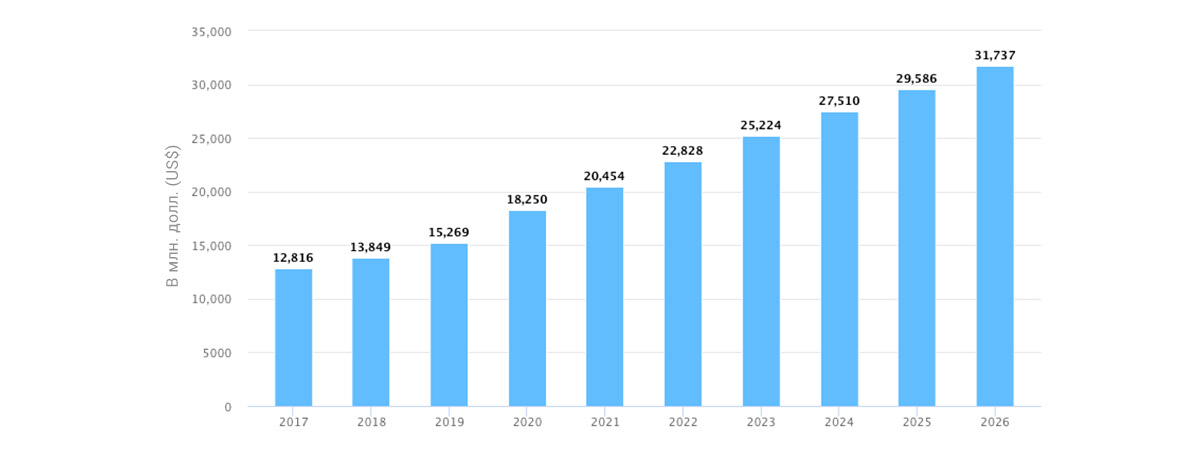
- According to a Statista report, in 2020 mobile game revenue in the US was $18.25 billion, and it is expected to grow to $22.828 billion by 2022.
- The US mobile game market is growing, opening great prospects for new innovative gaming platforms. It is noted that in the first year, games like COD Mobile and PUBG Mobile reached $500 million in revenue, and in 2020, their earnings amounted to $2.6 billion.
- In 2021, there were nearly 2,659.5 million mobile game users worldwide.
- It is forecasted that by 2024, the compound annual growth rate (CAGR) of the mobile gaming application market will be 2.9%.
- Over 72% of gamers in the US play games on their mobile phones.
Factors Influencing Mobile Game Development Cost
When creating mobile gaming applications, it is useful to consider several key factors. Let's look at the most important aspects that determine development costs.
1. Preparation Costs
To ensure a well-organized mobile game development process, developers initially create a tactical design concept (GDD) that contains all game details. This is the most important stage, serving as the foundation of the entire project.
The process of developing game design documentation requires time and effort, resulting in significant upfront costs. You can estimate them as labor costs based on an hourly rate.
2. Platform
It's best to choose iOS, Android, or both platforms simultaneously. This choice significantly affects development costs, audience reach, and profitability.
Development for Android is more expensive, but this platform is more popular in mobile gaming. Development for iOS is cheaper, but managing Apple devices and payment systems is more costly.
Developing an app for a single operating system is cheaper, but then you won't be able to earn revenue from other platforms. Thus, the best option is to create a cross-platform game, allowing you to leverage the advantages of each OS.
3. Design
Developing a gaming application is a multi-layered process. In design development, target users and game levels are defined, and the game environment and gameplay are shaped. If errors or inaccuracies occur in design planning, the gaming application may have bugs and serious glitches. Therefore, this stage requires the utmost responsibility.
Many specialists involved throughout the design and development cycle are UI/UX designers, architects, and game artists. Their salaries depend on skills, experience, and level of involvement.
4. Testing Gaming Applications
Gamers dislike even minor bugs, so the testing process is just as important as development. Ensure the game runs smoothly without issues and that user-application interaction is optimal.
Determine the budget you can allocate for these services. This amount must be paid to the testing company.
5. Categories and Genres
Development costs largely depend on what type of mobile gaming application you are creating: simulator, social games, or hyper-casual games. Here is a classification of gaming applications by complexity.
- Casual 2D games. These low-budget applications include a soundtrack and basic 2D graphics. Although they are trivial 2D games, they offer great opportunities for scaling and increasing gamer engagement.
- Mini-games: Casual or mini-games are simple single-player games that don't require special gaming skills. If you want to include more graphics or have higher expectations for the application, you may need to adjust your budget.
- Mid-level games. These mobile games offer a storyline and character modeling, built on good graphics and multi-level architecture. Rich and diverse content increases replayability and engages players for longer periods.
- Social games: These games can be played by multiple users worldwide on social network platforms like Facebook. They are similar to browser games and may have access to limited user information. Typically, developers create them using SDKs provided by social platforms.
- High-level games: High-budget applications that open great prospects for engaging the target audience and generating profit. We recommend being very careful in choosing the game plan, strategy, and design.
- Business games. Modern companies have also learned to benefit from mobile games by improving team interaction efficiency. They use mobile games as corporate tools to encourage creativity, improve communication, and create a more engaging and fun work environment. These multiplayer applications are cross-platform compatible and feature captivating graphics, storylines, music and sound effects, and game levels.
6. Game Complexity
Once you have decided on the category and genre of the gaming application, you already understand its main features. If it's a simple game, integrating it with social networks may be sufficient. But when developing complex games like PUBG, you will need to expand functionality and add voice chat, gyroscope, and so on, which increases development costs.
7. Mobile Game Engine
The game engine, as core software, is another important factor affecting mobile game development costs. It is selected based on the feature set, type, and category of the game. Each engine has its own features, advantages, and disadvantages, but the key is that it should meet your requirements.
How Much Does Mobile Game Development Cost?
As mentioned above, the cost of mobile game development depends on a number of factors, including platform, functionality, implemented technologies, and game size. Moreover, costs can vary significantly between companies depending on their location.
Developing a game with cool, beautiful graphics, complex features, and multi-platform support is expensive. But if you lower your requirements, the price decreases proportionally.
Monetizing a Gaming Application
Using monetization in a mobile application allows you to earn profit when users download and regularly use it. Let's name the most popular methods.
1. In-App Purchases
This is a traditional monetization strategy used by many mobile app developers. It allows users to add or unlock certain features in free apps for a fee.
2. Subscription
The simplest and most popular monetization method, involving gamers paying a monthly fee to use the app. If the game is interesting and feature-rich, users usually agree to the subscription regardless of cost.
3. Advertising
The least favorite monetization type among hardcore gamers. However, despite this, advertising is one of the best ways to generate profit from your gaming applications. Moreover, annoyance with ads often motivates users to switch to a paid premium version without ads.
4. Freemium
A premium version of the app that is available for free in its basic form. As gamers become familiar with the product and its features, they play more actively, and to progress in gameplay, they need to make in-app purchases. Purchasing the premium version solves this problem. This is a promising monetization method because it allows users to appreciate the value of the game.
Conclusion
Mobile game development is a lengthy, multi-stage process requiring an effective team of specialists. Choosing a company specializing in mobile game creation is a critical factor that directly determines the future and success of your gaming application. You must be confident that you are getting the desired quality for your money. Compare several companies and choose the one that offers the best value at a reasonable price.
How much does custom mobile game development cost? You'll get the quickest answer if you show an example of an existing game. But remember that some games involve dozens of people working for several years, and we can only give you an estimate of the initial version of the product that you will bring to market.
Frequently Asked Questions
What is mobile game development?
Mobile game development is a lengthy process. It starts with creating a design concept and ends after the game's release, until all bugs are fixed and updates are created.
How many stages are there in mobile game development?
There are three main stages: pre-production, development, and post-production. Each covers a specific set of tasks, such as creating a game design document, prototyping, design, testing, launch, support, and updating the released product.
How long does mobile game development take?
The development time for a mobile game depends on many factors, including the type of game, design complexity, functionality, operating system platform, and the country of programmers, designers, and architects. To get an estimated cost and development time, write to us and provide the main points and theses.