


The Benefits of Cross-Platform Game Development
Learn about the possibilities, languages, and engines for cross-platform mobile and desktop game development.Everyone who starts developing mobile games is forced to make many important decisions. One of the main problems is the choice between native, cross-platform, and hybrid development. If you are considering cross-platform development, then even at the preparation stage you have to consider all possible risks to answer one question: is it worth it?
On the one hand, this type of development has many advantages, both for entrepreneurs and for gamers. On the other hand, developing cross-platform 2D/3D games for mobile devices is more difficult than native development, and can be too challenging for an unprepared team.

In this article, we will explore when cross-platform development is the best solution and look at the main pitfalls to consider before starting work. In addition, we will discuss services for developing mobile games that may be useful if you decide to go this route.
When to Choose Cross-Platform Development
A cross-platform mobile game is an application that can run on different platforms or mobile devices. This type of development is useful in various situations:
- You want to launch the game on different platforms. The main reason companies choose cross-platform development is the desire to release the game simultaneously on iOS and Android. Different platforms support applications written in different programming languages, but cross-platform development relies on a common code that can be adapted for all major platforms.
- You don't have time to develop multiple native applications. Cross-platform games and applications are designed on a single code base, while native applications are written in different languages. For example, iOS applications are written in Objective-C and Swift, while Android applications are primarily written in Java and Kotlin. As a result, developing one cross-platform game takes less time than developing two separate applications.
- Your budget is limited. Of course, if you plan to launch a mobile game only on Google Play or only on the App Store, native app development will be cheaper. But if you plan to enter both markets simultaneously, developing two separate native applications will require more resources.
- You are interested in maximum market coverage. Launching a product on multiple platforms simultaneously significantly expands the audience and increases profits – this is one of the key advantages of custom game development. In addition, such games attract users with unique features that are impossible or very difficult to implement in native applications. For example, many players want to play multiplayer games with users from other platforms, or switch from one platform to another without losing progress.
- You don't want to spend a lot of time on future updates and technical support. A single code base not only eliminates the need to develop separate applications for different platforms, but also significantly simplifies the update release process. You won't have to release the same update multiple times for different platforms.
Top 3 Challenges in Developing Cross-Platform Mobile Games
Working with a Single Code Base
The concept of multi-platform code sounds attractive, but in practice, developing reliable software for multiple platforms is a challenging task even for experienced developers. You need to consider the specifics of each operating system on which the game will be released. Additionally, you will have to allocate additional resources for testing.
Otherwise, you will face the typical problem of cross-platform game developers: each platform will have its own missed bugs, and the team will have to spend time fixing them after the game's release.
Integration
The integration phase causes difficulties not only in cross-platform game development. This stage is accompanied by problems typical for any type of development and testing. Not all frameworks support the integration of the application with settings for different device types.
Some platforms have unique conditions for integrating social networks. It is not recommended to abandon social integration: it is one of the most effective ways to promote a product. Thus, to achieve maximum audience reach, you will have to deal with the specific requirements of each platform, and possibly order software development.
Optimization
Unlike native applications, cross-platform games suffer from reduced performance levels. This happens because such games simply cannot be properly optimized for each platform at the backend level. Thus, even optimization to acceptable performance levels takes more time, as developers have to account for the features of each operating system and device within a single codebase.
How to Develop Cross-Platform Mobile Games
The development of any application or game can be conditionally divided into five key stages. When working on a cross-platform game, it is important to consider the product's features at each stage to achieve a quality result. Here is what a typical development cycle of a multiplatform mobile game looks like:
- Planning. Pre-production is one of the main stages of cross-platform game development, as at this stage not only the game itself is planned, but also the development process for multiplatform. Pre-production includes approving the key idea and concept of the project, defining technical requirements, and consolidating the approved information in a design document that will be used in all subsequent development stages.
- Execution. To create cross-platform games, game engines or special programs that support multiplatform development are typically used. Such platforms usually offer ready-made plugins and scripts for developing games on standard code that works for iOS and Android devices. Even with these auxiliary measures, the team will have to invest a lot of time and effort to create a cross-platform game. Essentially, it is the same as developing several different applications within one.
- Quality Control. Testing is a key part of multiplatform game development, as such games often contain more bugs than native applications. Testers write scripts for automated testing to simulate user actions, and simultaneously conduct manual tests. This way, specialists identify critical errors in the mobile game on different platforms and fix them before release.
- Final Touches. When the game is almost ready, testers conduct final tests to ensure the game is ready for release. The last critical bugs are fixed after beta tests: at this stage, the game is tested not only by specialists but also by the target audience, who leave bug reports and detailed feedback on overall impressions.
- Release and Support. After fixing all discovered issues, the game is ready for release, but the work on it does not end there. After entering the market, the game needs regular updates to maintain user interest, and after each update, the product goes through a new testing cycle to identify and fix all new bugs. In addition, the product requires constant server monitoring and user support.
Developing cross-platform games involves many unique challenges, but the result is a product that generates significant profit by reaching the maximum audience.
Top Tools for Cross-Platform Development
Our company has developed dozens of mobile games for different platforms. This experience has allowed us to try out various methods of multiplatform development in practice and find the most productive solutions that suit both large developers and small teams of enthusiasts. And now we want to share this knowledge with you!
Best Languages for Cross-Platform Mobile Game Development
1. C++
C++ is one of the most common languages for multiplatform video game development. Many popular mobile games, such as Clash of Clans, are written in C++. The reason for its popularity is that this language is supported by the most popular mobile platforms, iOS and Android. Additionally, it provides high performance and scalability for mobile applications.
2. JavaScript
Developing cross-platform mobile games with JavaScript is another popular way to create applications for iOS and Android. Frameworks that support JavaScript feature a more modern structure and an extensive library of ready-made scripts. This language also makes it easier to deeply customize animations, interactive elements, and more.
3. HTML5
The main advantage of HTML5 is its versatility. HTML5 allows developers to create games that are supported not only on iOS and Android devices, but also on computers running Windows/Linux/Mac OS. This language also makes it possible to release web versions of applications for browsers such as Google Chrome, Safari, Opera, and others.
Best Engines for Cross-Platform Development
A framework for cross-platform mobile development is a set or library of tools and templates for creating applications for different platforms. Some of these engines are widely used by developers around the world.
1. Unity & Unreal Engine
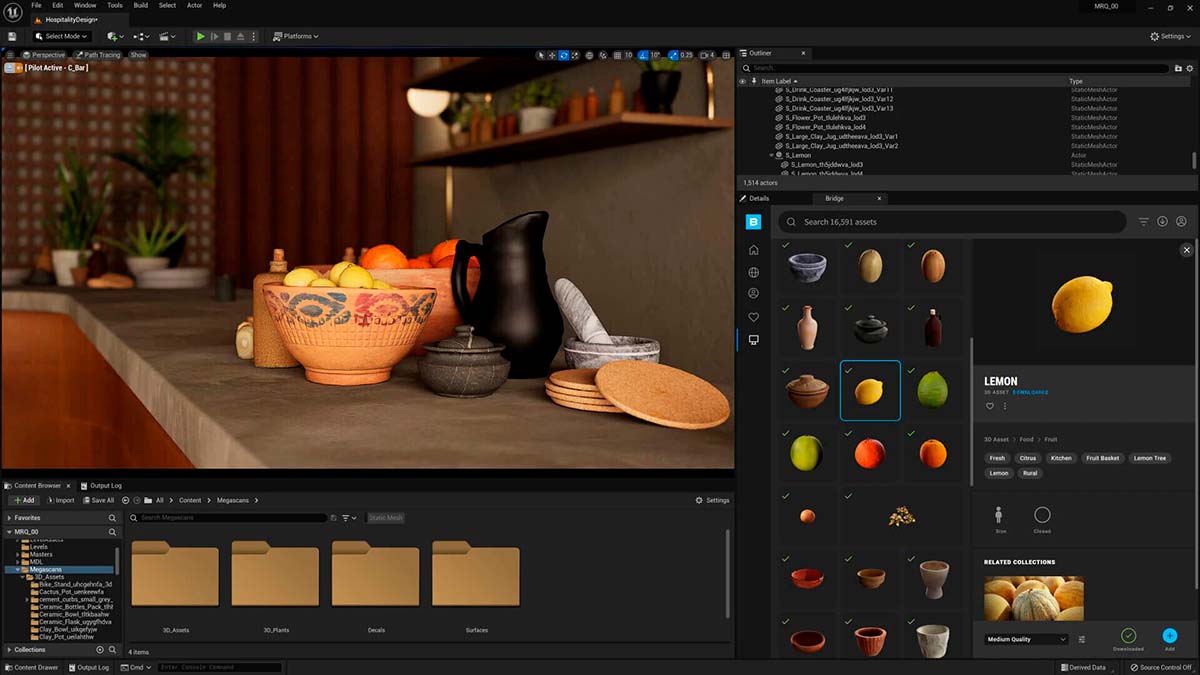
Unity and UE4 are the most popular and effective game engines that allow you to create different types of games, including cross-platform mobile games. To work with Unreal Engine, C++ is typically used. Comprehensive information about this language can be found in the engine's documentation. Additionally, the framework allows you to work on visual effects for games supported on different platforms using the visual scripting language Blueprint. Before starting development, the framework must be configured to create cross-platform products.

Unity is somewhat similar to Unreal Engine: it is another engine widely used for video game development thanks to extensive libraries and detailed documentation. Unity is more often used for developing mobile cross-platform games because it is easier to set up for multiplatform work. Additionally, this engine offers a wide selection of 2D resources that are useful for mobile development, as mobile games are more often made in 2D than PC games and other platforms.
2. Cocos2d-x
Cocos is a free cross-platform engine that supports JavaScript, Lua, and C++. The engine is primarily designed for developing mobile games for iOS and Android in 2D and 3D. Thus, it includes a large tool panel for simplified programming, rendering, and intuitive GUI development.
There is also another version of this engine called Cocos Creator. It uses JavaScript and TypeScript and offers a free game editor that allows you to create a game from scratch. Both engines are actively used for developing cross-platform games and applications, but Cocos Creator is easier for beginners to learn.
3. Godot Engine
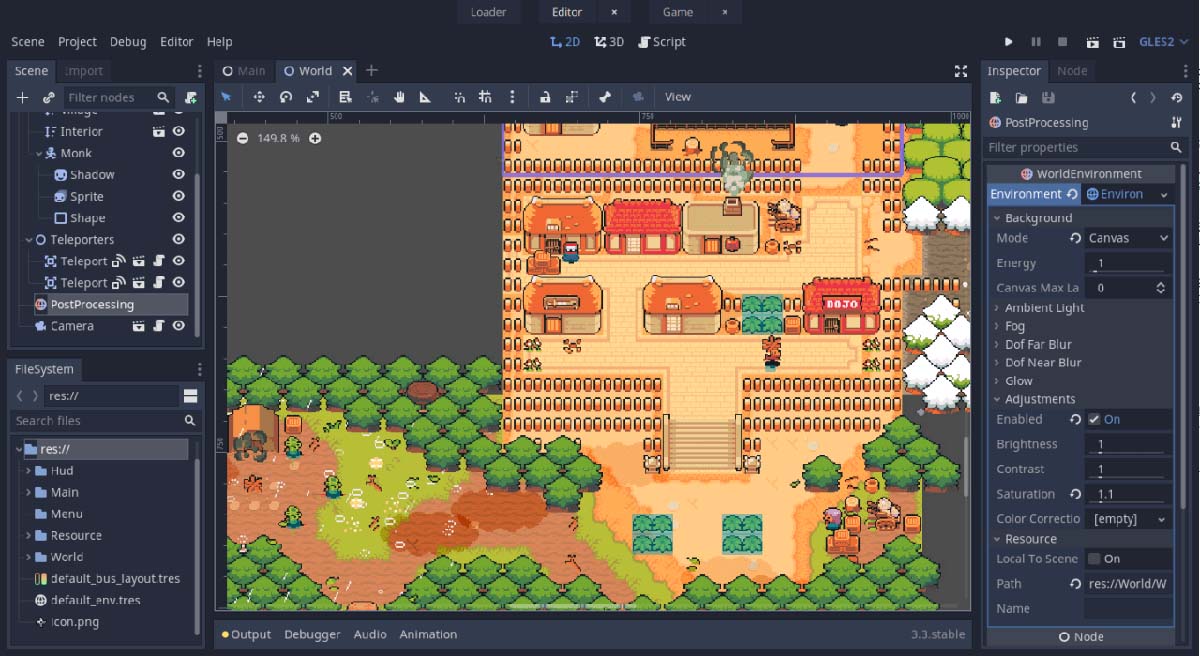
Godot Engine is a free engine for developing games on iOS and Android that also supports personal computers and consoles. Developers typically use HTML5 to write a single codebase. The engine includes built-in virtual script nodes and a visual editor that speeds up the development process. This makes Godot an optimal choice for situations when the deadline is close and work on the project needs to be completed in a limited time frame.
Choosing mobile development services for your needs
Cross-platform development is full of nuances that cannot be described in a single article or memorized after reading programming textbooks. The best option is to hire qualified specialists who have not only deep theoretical knowledge but also extensive practical experience.
Our company offers a wide range of services for developing native and cross-platform games for mobile devices. We have been developing for many years, and during this time we have not only created games but also developed complex unique solutions that have helped our clients reach a new level of success in the gaming industry.
Are you ready to create a great cross-platform mobile game that will bring you not only a steady income but also a loyal user base? Then let's discuss the details: contact us and get ready to receive a result that exceeds all your expectations.